Key Takeaways:
- A modular home is built as factory-made sections and normally assembled on a permanent foundation under the building codes that apply at its destination.
- A manufactured home in the United States is built to the federal HUD Code on a permanent chassis.
- A manufactured home is not automatically a mobile home; formal U.S. terminology changed on June 15, 1976.
- Manufactured homes usually have a lower starting price, but land, lot rent, foundations, delivery, utilities, financing, and local completion determine the total cost of ownership.
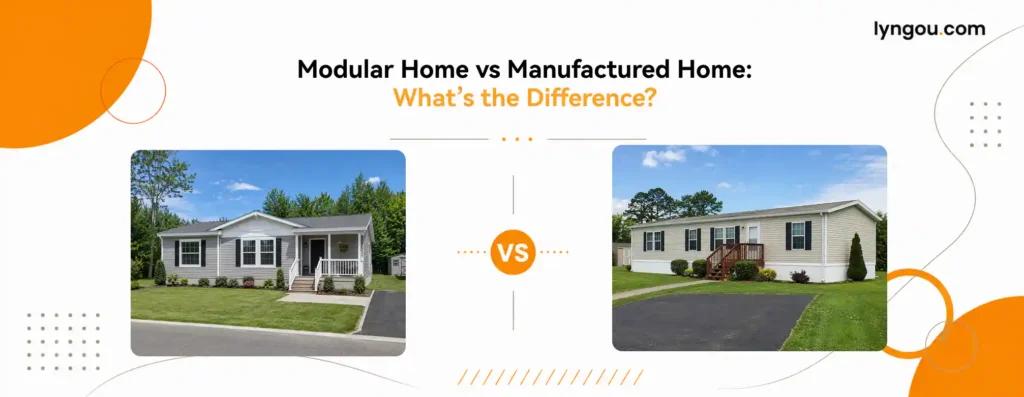
- Both modular and manufactured homes are built largely in a factory, but that does not make them the same type of home. In the United States, they follow different codes and may be financed, titled, and appraised differently.
When I compare a modular home vs manufactured home, I start with the regulatory path—not the appearance. This guide explains the distinctions that matter before you choose a home, buy land, apply for financing, or compare quotations. Because manufactured home is a specific U.S. classification, international buyers should confirm how these terms are used at the destination.
Modular Homes vs Manufactured Homes at a Glance
The table gives the short answer; the sections that follow explain what each difference means for a buyer.
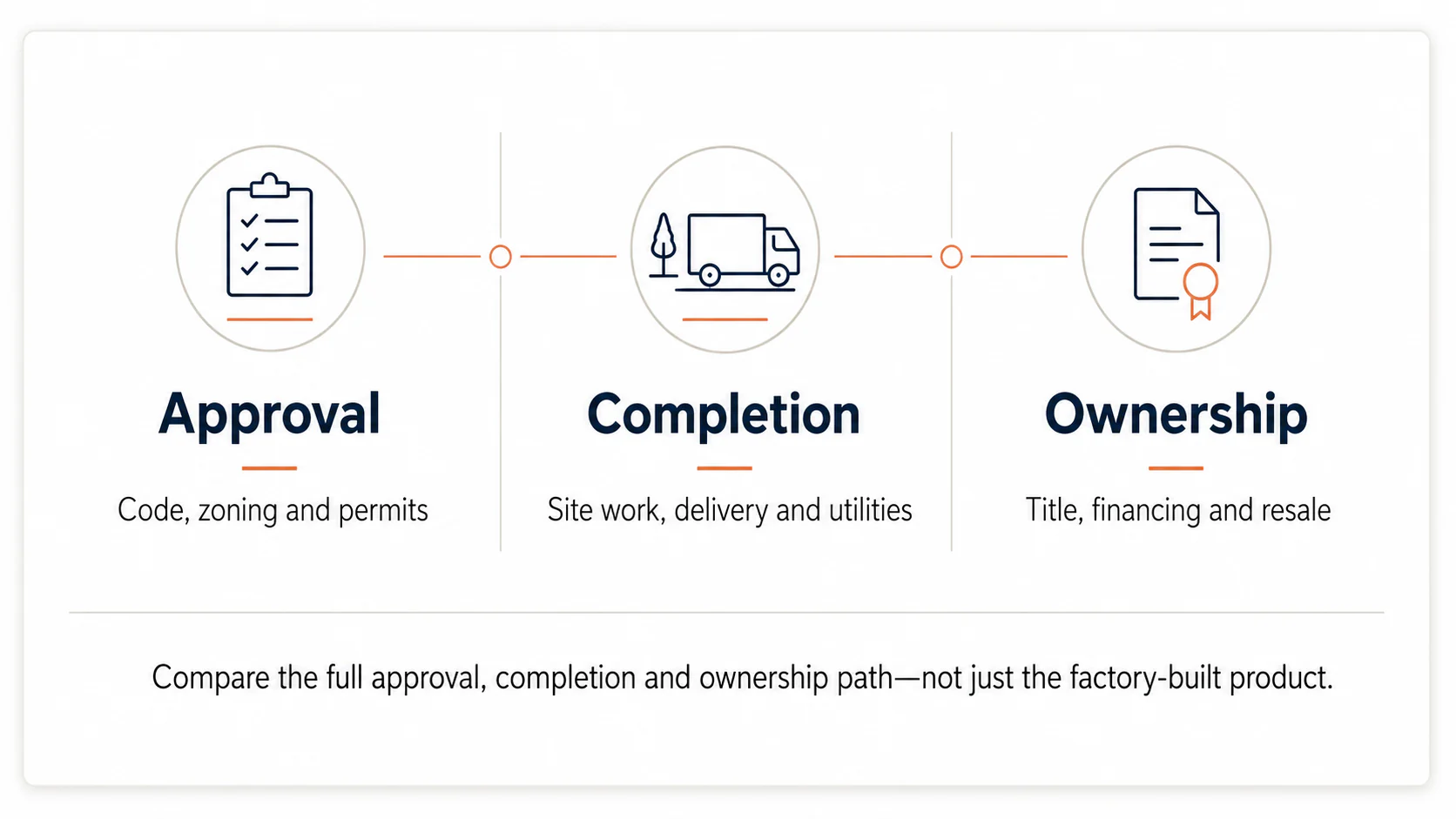
The difference between modular and manufactured homes extends well beyond factory production. Code, chassis, foundation, land, and ownership structure can change the buying path.
What Is a Modular Home?
A modular home is a permanent dwelling assembled on site from three-dimensional sections produced in a factory. The modules arrive substantially prepared, are joined on a foundation, and are completed as one building.
Common types of modular homes include compact single-module homes, connected multi-module layouts, and multi-story configurations. Their appearance does not determine their classification; the construction and approval method does.
Modular is one part of the broader prefab category. For panels, kits, pods, and modules, see Lyngou’s guide to what a prefab home is.
What Is a Manufactured Home?
In the United States, a manufactured home is a factory-built dwelling constructed under the federal Manufactured Home Construction and Safety Standards, commonly called the HUD Code. It is produced on a permanent chassis and delivered in one or more transportable sections.
Homes manufactured after June 15, 1976 carry identifying certification labels and a data plate. The U.S. Department of Housing and Urban Development provides official guidance on these records.
Is a Manufactured Home a Mobile Home?
People often use mobile home and manufactured home for the same product, but the formal U.S. terminology depends on date. A factory-built home produced before June 15, 1976, is generally called a mobile home; one produced afterward to the HUD Code is a manufactured home. I would not use the terms interchangeably in a contract or loan application.
How Can You Tell Whether a Home Is Modular or Manufactured?
Do not rely on appearance alone. Use the documents and labels that establish the home’s classification.
For a manufactured home, check:
- The exterior HUD certification label on each transportable section
- The interior data plate and serial information
- The title or real-property conversion documents
- Installation and foundation records
For a modular home, check:
- State modular or industrialized-building labels where applicable
- Approved construction documents and inspection records
- Foundation and building permits
- The original builder, supplier, or property records
A visible steel frame is not enough to classify a home. If the records are unclear, ask the relevant state agency, lender, appraiser, or building authority.
The Differences That Affect Your Decision
These are the practical differences I would resolve before comparing floor plans or negotiating price.
1. Building Codes and Inspections
The two code paths affect who reviews the plans, which standards apply, and what must be approved at the destination.
A modular project may require factory inspections followed by local review of the foundation, module connections, and site completion. A manufactured home follows federal production standards, together with applicable installation and local site requirements.
Before ordering, confirm the responsible authority, design loads, energy requirements, and permit route.
2. Foundation, Chassis and Mobility
A modular home is normally secured to a permanent foundation, while a manufactured home is built on a chassis that remains part of the structure. This is one of the most important differences in a manufactured vs modular home comparison.
However, retaining a chassis does not make a manufactured home easy to relocate. Moving either type after installation may require permits, utility disconnection, structural assessment, specialized transport, and preparation of a new site.
3. Land, Title, Zoning and Ongoing Costs
Land ownership can affect the total cost and legal status of the home.
A modular home is normally secured to a permanent foundation and treated as part of the real estate. A manufactured home may be classified as personal property or real property, depending on local law, its foundation, and whether the buyer owns the land.
Local rules also determine where each home can be placed. Manufactured homes may face additional zoning, subdivision, or community restrictions based on their classification, size, or installation method. Modular homes may encounter fewer classification-specific restrictions, but neither type is automatically permitted on every lot. The available options can vary considerably between rural properties, manufactured-home communities, and urban sites.
Before buying either one, check:
- Whether the land is owned or leased
- Zoning and minimum-size requirements
- Deed restrictions, subdivision covenants, and HOA rules
- Setbacks, site access, and utility availability
- Soil conditions, grading, drainage, and space for delivery equipment
- Real-property or personal-property taxes
- Monthly lot rent and community charges
For example, two similarly priced homes can have very different ownership costs when one includes the land and the other requires monthly lot rent. Compare the complete property and financing arrangement—not the home price alone.
4. Total Project Cost, Financing, Appraisal and Insurance
The purchase price does not represent the complete project cost. Land, site preparation, foundations, transport, utility connections, approvals, and local completion can significantly change the final amount.
For either option, compare the total cost of reaching occupancy:
- Home or factory package
- Land and site preparation
- Foundation, transport, and lifting
- Utility connections
- Permits, inspections, and local completion
Financing reflects how the home and land are owned, titled, and installed. Modular homes on owned land are often financed similarly to site-built homes. Manufactured homes may qualify for a conventional mortgage when property requirements are met.
FHA Title I may finance a manufactured home, a lot, or both. If the home is financed separately from the land, a chattel loan may be required; the Consumer Financial Protection Bureau reports that these loans generally carry higher interest rates and fewer protections than mortgages.
Appraisal requirements also vary by property status and loan program. Fannie Mae’s factory-built housing guidance explains how modular homes and other factory-built homes are handled for appraisal purposes.
Insurance should be confirmed separately for the specific home, foundation, and location. Before paying a non-refundable deposit, ask the lender to confirm the available loan route and appraisal requirements, and ask the insurer to confirm coverage and premiums.
5. Design, Delivery and Everyday Performance
Modular homes generally offer more flexibility in floor plans, exterior design, and adaptation to a specific site. Manufactured homes follow more standardized plans but may still offer choices in finishes, fixtures, and selected layout details.
Both approaches can reduce on-site construction time, but the complete schedule also includes design approval, foundation preparation, transport, installation, utility connections, and inspections.
Comfort and efficiency come from the actual specification and installation—not the category name. Insulation, air sealing, windows, moisture control, heating and cooling systems, and workmanship all affect energy use, indoor temperature, and noise levels.
Long-term maintenance also reflects how easily exterior joints, plumbing, equipment, and connections between building sections can be inspected and repaired. Neither category automatically guarantees better durability, comfort, or efficiency.
6. Resale Value and Future Marketability
Future resale value reflects the local market, property condition, and how easily a buyer can finance the purchase. Modular homes are often sold with the land and valued alongside comparable site-built homes. For manufactured homes, resale may be affected by whether the land is included or leased, how the home is legally classified, and which financing options are available.
Neither modular or manufactured home is guaranteed to appreciate or depreciate. Location, maintenance, land value, and local demand influence both. Leased land or limited financing options may reduce the number of potential buyers and make the home take longer to sell.
Which Home Type Fits Your Priorities?
Neither system is universally better. The right choice comes down to the outcome you need.
A Modular Home May Fit Better If You…
- Plan to build a permanent home on a specific site
- Need greater control over the layout or exterior
- Want the completed property to follow a conventional real-estate path
- Can coordinate local foundations, installation, and approval
- Expect to hold the home and land together over the long term
A Manufactured Home May Fit Better If You…
- Are purchasing within the U.S. manufactured-housing system
- Prefer a standardized floor plan and production route
- Prioritize a lower initial housing price
- Have confirmed an eligible site or community
- Understand the title, financing, lot costs, and installation requirements
Before You Sign, Confirm
- The home’s legal classification and approval route
- Land ownership, lease terms, and site restrictions
- Foundation, site preparation, and installation responsibilities
- Total delivered and completed project cost
- Financing, appraisal, and insurance eligibility
- Supplier and installer credentials
- Warranty coverage and responsibility for defects
This checklist is more useful than generic pros and cons of manufactured vs modular homes because it relates each decision to the actual property.
What International Buyers Should Confirm
International buyers need one additional step: matching the building system to the destination country’s terminology and regulations. Terms such as modular, manufactured, mobile, and prefab may have different legal meanings across markets.
In addition to the checklist above, confirm:
- Whether factory drawings require review or adaptation by a local engineer
- Destination-specific structural, climate, fire, and energy requirements
- Shipping dimensions, customs procedures, unloading access, and lifting arrangements
- The division between factory supply, local construction, and final certification
Lyngou develops prefab and modular residential systems around the destination, site conditions, layout, structural requirements, and delivery route. According to the product and project, supply may range from a labeled kit or component package for local assembly to more complete factory-finished modules. Selected compact homes can be delivered as complete units where transport dimensions, site access, and local approvals allow.
Buyers can review our prefab process or explore adaptable prefab house plans before sending their site, layout, and preferred delivery requirements.
Frequently Asked Questions
What are modular buildings?
A modular building is produced as three-dimensional factory sections, transported and connected on site. It may serve as a home, office, school, or other facility; a modular home is its residential application.
Is a modular home considered a manufactured home?
No, not in the U.S. regulatory sense. Both are forms of factory-built housing, but modular homes follow destination-based building codes, while manufactured homes follow the federal HUD Code and are built on permanent chassis.
Is a modular home a mobile home?
No. A modular home is transported in sections for initial installation, but it is normally assembled on a permanent foundation. A mobile home is an older U.S. classification associated with transportable factory-built housing produced before June 15, 1976.
How is a modular home different from a stick-built home?
Both generally follow the building codes applying at the destination. The main difference in a stick-built vs modular comparison is where construction occurs: a stick-built home is built mainly at its final site, while a modular home is produced as factory-built sections and assembled on site.
Can a modular home be moved after installation?
It may be technically possible, but modular homes are often intended for permanent placement. Relocation requires engineering review, permits, service disconnection, transport planning, a new foundation, and repairs.
Does a manufactured home require a permanent foundation?
Not in every situation. However, a qualifying permanent foundation may be required for certain mortgage programs, real-property conversion, or local installation conditions. Confirm the requirements for the specific property and financing route.
Conclusion
The most important difference between a modular home and a manufactured home is the regulatory and property path—not simply that both are built in a factory.
Before choosing, confirm the code, chassis, foundation, land arrangement, total installed cost, and financing eligibility. Once those facts are clear, the right option becomes much easier to evaluate.
For a project-based prefab home, Lyngou can help define the layout, factory package, and delivery approach around your destination and local completion plan.