
For clinics, medical office buildings, hospital support spaces, wards, and selected procedure-related expansions.
Healthcare projects often need faster delivery, less site disruption, and a building system that supports real operational needs.
Lyngou’s flexible modular healthcare buildings are designed for more practical delivery and better project coordination.
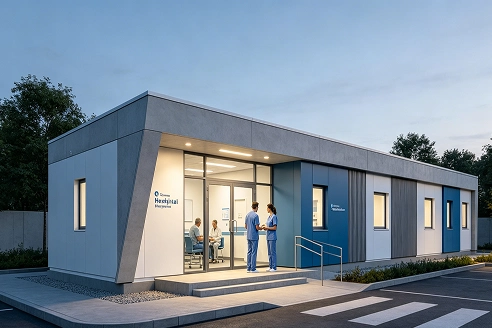
Not every healthcare project needs a fully volumetric modular format. Some projects use panelized systems. Others rely on coordinated components or more integrated prefab elements. In many cases, prefab and site-built work are combined in a hybrid approach.
Common prefab approaches include:
Healthcare construction is rarely only about the building. It is about operations. Active sites, tight schedules, phased expansion, and room consistency all matter.
Prefab helps move repeatable work into the factory while site preparation, utilities, and installation planning move forward in parallel, which can reduce disruption compared with fully site-built healthcare construction.
Healthcare construction is about adding space without interrupting the way the facility works.
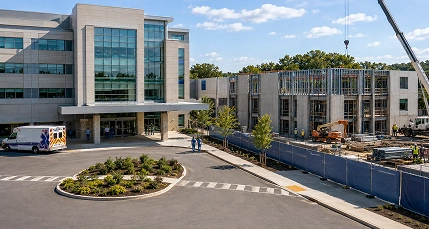
We offer a set of compact layout families that can be adapted to your needs. Interiors can shift between living, working, and guest use.
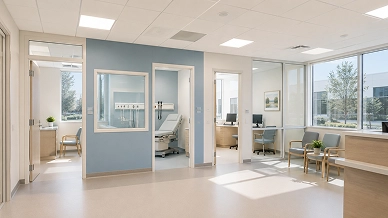
Prefab Medical Clinics
Suitable for outpatient care, consultation rooms, exam spaces, and community healthcare projects. This may include prefabricated modular health clinics where efficient layouts and repeatable room planning matter.

Modular Medical Office Buildings
A practical option for larger medical office projects that combine consultation, reception, staff work areas, administration, and support functions in one coordinated building.

Hospital Support Buildings
Useful for non-patient-primary hospital functions such as administration, staff areas, coordination spaces, diagnostic support areas, and selected support-related expansions, including certain modular laboratory building applications where project scope and utility planning align.
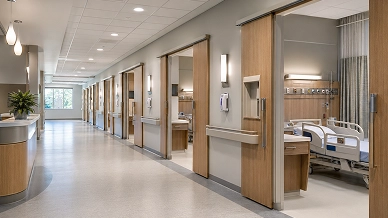
Wards and Inpatient Expansion
Suitable for projects that need additional bed capacity, repeated inpatient room layouts, and more controlled expansion planning.
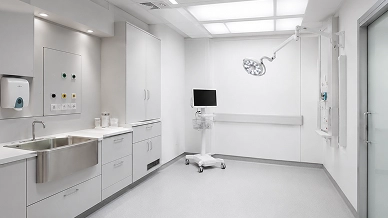
Procedure and Selected Treatment Spaces
For selected treatment and procedure-related environments that require more careful coordination between layout, utilities, finishes, and operational use. This may include selected modular operating rooms or procedure-room-related expansion contexts.
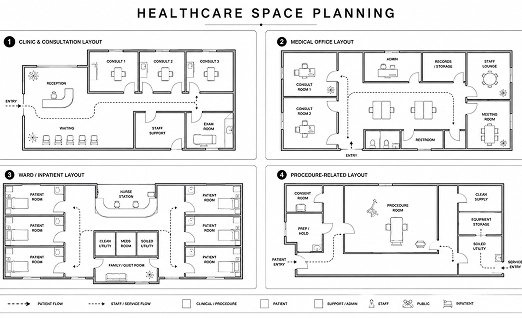
Operation theatre rooms, procedure rooms, wards, or medical offices often describe very different healthcare environments. This is why modular hospital construction should always start with room function, operational workflow, and the level of utility coordination.
The right delivery approach depends on site access, speed requirements, clinical function, installation constraints, and how much work should remain on site.
A practical option for larger or more customized healthcare projects that need flexible local assembly and phased rollout.
A strong fit for repeatable clinics, wards, and support spaces that need better coordination and faster site progress.
Suitable for selected projects that benefit from reduced on-site work and more complete unit delivery.
Often the most practical route when repeated healthcare spaces are combined with site-specific support or treatment areas.
Many modular healthcare construction projects work better with a hybrid prefab strategy than with a rigid delivery format.
Structural and Envelope Systems
Structured systems that combine design logic, materials, and components for efficient on-site construction.

Doors, Windows, and Interior Partitions
Planned around circulation, visibility, daylight, privacy, and practical room use across clinics, wards, and support spaces.
Utility-Ready Zones
To help align room planning with HVAC, power, plumbing, and service routing early in the project.
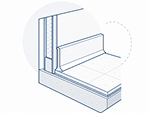
Selected Finishes, Skirting, and Trims
To improve finish consistency, detail coordination, and the overall handover quality across healthcare spaces.
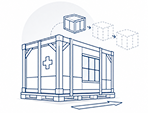
Packaging and Shipment Planning
To support phased installation, reduced site disruption, and more predictable project rollout.
A clinic consultation block, a ward expansion, and a procedure-related healthcare addition may all follow very different cost paths, even when the building size looks similar on paper.
Clinics, medical offices, wards, and hospital support spaces do not carry the same planning or delivery requirements.
Spaces with more technical or service-heavy requirements need more coordination and more integrated planning.
Component-based, panelized, integrated, and hybrid delivery each affect transport, installation, and site scope differently.
More complete systems may reduce on-site work, but can change handling, shipping, and project sequencing.
HVAC, power, plumbing, finishes, and selected room-system coordination can significantly affect final cost.
Transport distance, foundations, site access, and active-facility conditions all influence project budget.
The better question is not simply what a modular healthcare building costs. It is the prefab strategy that creates the right balance between speed, site disruption, room function, and project budget.
Different healthcare spaces need different delivery logic.
We help align structure, room planning, selected fit-out scope, and shipment strategy.
From component-based systems to panelized and selected integrated delivery.
Especially useful where speed, repeatability, and reduced site disruption matter.
We support modular healthcare buildings through flexible prefab systems rather than one rigid construction format. Healthcare projects usually succeed or fail on coordination quality, not only on construction speed. That is why the right prefab strategy matters more here than in many standard commercial buildings.
Modular healthcare buildings are healthcare facilities that use some level of off-site construction, including component-based, panelized, integrated, or hybrid prefab delivery.
Selected modular operating theatre or procedure-related expansion needs may be considered where layout, utilities, workflow, and installation planning can be arranged properly.
Yes. Clinics and medical office buildings are often strong fits for structured prefab delivery because they benefit from repeatable layouts and clearer coordination.
We support different delivery strategies, including coordinated components, panelized systems, prefab building kits, and selected integrated units.
The main factors usually include building type, room complexity, delivery method, utility scope, factory completion level, shipping, and local installation conditions.
Tell us about the building type, room types, site conditions, timeline, and preferred delivery scope. We’ll help define the most practical prefab strategy for your healthcare project.
Tell Us About Your Project