
More livable than an immediate shelter and more flexible than permanent housing.
Lyngou supports transitional housing, recovery housing, and related temporary residential projects through flexible prefab systems. Our focus is not on an instant tent-based response. It is planned, practical housing that helps move people from disruption toward stability.
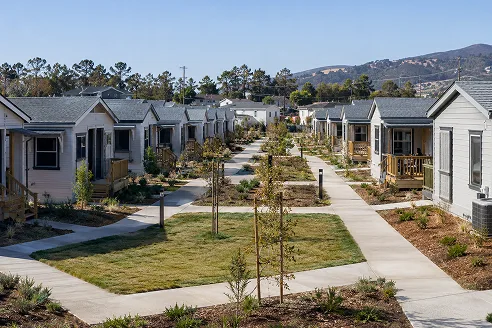
In official U.S. housing and disaster-recovery language, emergency shelter, temporary housing, and transitional housing often serve different phases of need. FEMA’s housing planning and disaster housing materials distinguish immediate sheltering and temporary housing from the broader recovery process, while HHS and HUD both use the transitional house as part of the housing continuum, not as another term for emergency shelter.
Unlike a very short-term shelter, a transition house is not just a place to sleep tonight. It is part of the path toward normal daily living. That means better planning for privacy, bathrooms, kitchens or kitchenettes, storage, utilities, and day-to-day living.
We are not positioning ourselves as an instant local emergency tent vendor. But we can be a prefab emergency housing supplier, as our strength is in highly customized prefab housing systems. We can support projects related to emergency housing applications, but our prefab systems are especially suited to transitional housing where planning, repeatability, and real residential use matter more than ultra-immediate first-response deployment.
The transitional house can support a range of recovery and temporary accommodation needs, including:
Main purpose: immediate response
Typical timeline: very short-term
Best fit: urgent shelter and first response
Main purpose: short-term accommodation after immediate response
Typical timeline: short-term
Best fit: rapid temporary placement
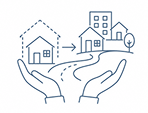
Main purpose: recovery-phase accommodation and temporary residential stability
Typical timeline: temporary-to-medium-term
Best fit: recovery housing, relocation, family support, and community-based transition
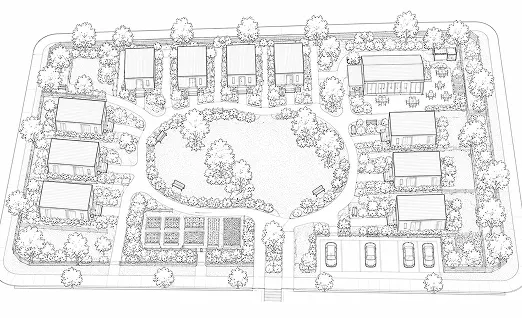
Faster housing rollout through coordinated prefab systems
More repeatable layouts for temporary residential communities
Better utility coordination for bathrooms, kitchens, and service zones
Easier phased growth from small clusters to larger housing communities
A clearer path to livable occupancy than shelter-only solutions
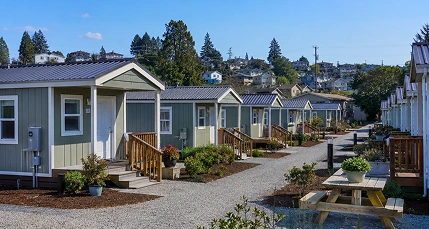
Transitional housing is rarely just about one unit. In many cases, it involves repeatable housing layouts delivered across a larger site.
That makes community planning just as important as the unit itself. A single unit can solve a small problem. A well-planned community can solve a larger one.
For many recovery housing and crisis housing projects, important planning factors include pathways and access, circulation, utilities, support spaces, and phased growth. This is where prefab systems can add real value.
Not every transitional house project needs the same level of prefabrication. Some projects need more flexibility for local assembly, while others need faster installation for repeatable residential units. The right delivery method usually depends on the site, timeline, transport conditions, and intended length of use.
Flexible local assembly. A practical option for transitional house projects that need flexible local assembly, phased rollout, or lower shipping volume.
Best for
* Larger housing communities
* Phased recovery housing projects
* Local installation teams
* Sites that need more adaptability
Balanced speed and coordination. For repeatable residential layouts that need better coordination, faster site progress, and a more structured delivery path.
Best for
* Recovery housing communities
* Repeatable family or single-unit layouts
* Temporary residential clusters
* Planned transitional housing developments
Reduced on-site work. Suitable for selected projects that benefit from faster installation and reduced on-site assembly.
Best for
* Simpler, repeatable housing blocks
* Selected temporary emergency housing applications
* Sites with suitable transport access
* Projects that require faster setup
Best for mixed-scope communities
Often the most practical approach when housing units repeat, but shared facilities, support spaces, or site conditions require more flexibility.
Best for
* Housing and service buildings
* Community-based transitional housing
* Mixed-scope recovery projects
* Phased residential developments
For disaster relief housing projects that need more livable accommodations after wildfires, hurricanes, floods, or other disruptive events.
For organized housing clusters designed to support short-term to medium-term occupancy with repeatable units, shared site planning, and phased deployment.
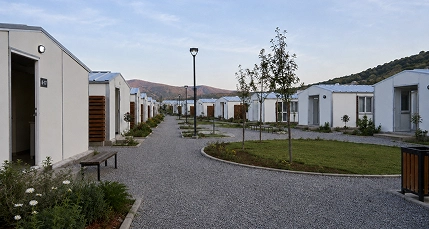
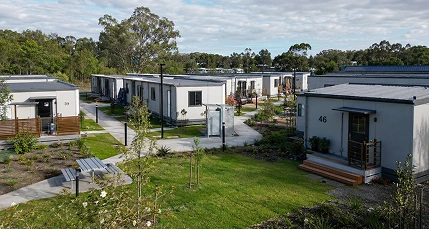
For projects that need more privacy, utility coordination, and everyday usability for families or shared households.
For projects exploring prefab recovery housing systems with better livability, faster deployment, and more structured installation than basic temporary shelter.
Good layouts make units easier to use, easier to maintain, and more suitable for temporary-to-medium-term living. That is why transitional house plans and modern transitional house plans matter.
For individual occupancy or highly efficient temporary residential layouts.
For projects that need better privacy, bathroom planning, and more complete residential use.
Clustered Community Layouts
For site-based housing groups with shared access, utility planning, and scalable unit repetition.
Layouts affect privacy, utility coordination, circulation, and the overall livability of the housing system.
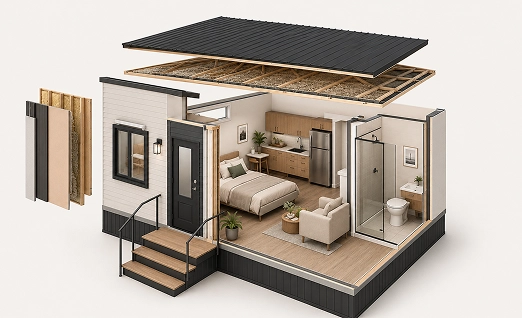
We support more than the main structure alone. Depending on the project, the selected interior and finish-related scope can also be coordinated.
This helps transitional housing move toward a more complete, livable result instead of stopping at the building shell.
The cost of a transitional house project depends on more than square footage alone.
Larger communities change both production and site coordination scope.
Family-oriented layouts and single-occupancy units often require different planning.
Component-based, panelized, integrated, and hybrid delivery can affect both transport and installation costs.
More complete units may reduce site work but increase transport requirements.
Bathrooms, kitchens, finishes, and selected furniture packages all affect the total project cost.
Transport distance, utilities, foundations, and local installation conditions all matter.
The better question is not simply how much emergency housing costs. It is the level of prefabrication that creates the right balance between speed, livability, and budget for the project.
As a prefab supplier, we are experienced in planned housing delivery, repeatable systems, and livable project outcomes, especially for residential house projects and structured temporary residential communities.
Customized solutions for structure, layout, selected finishes, material strategy, and shipment planning, including practical material choices for more durable temporary housing.
Better suited to planned temporary communities than tent-based shelter systems. The right transition house solution is about creating a more stable path toward daily living.
Selected trims, skirting, accessories, and furniture-related scope can be coordinated for different project requirements.
Transitional housing is temporary-to-medium-term housing designed to support people during recovery, relocation, or other periods of change. It is usually more livable and more structured than a basic emergency shelter, and it is often planned for a longer period of use.
Emergency housing usually focuses on immediate shelter or very short-term accommodation. Transition housing is more suited to recovery-phase accommodation and temporary residential use that needs better livability, more stable layouts, and a longer expected period of occupancy. In practice, the terms can overlap, but they often serve different phases of need.
Yes. Prefab systems are often well-suited to transition housing projects because they support repeatable housing clusters, phased rollout, and more structured community planning.
We support different delivery strategies depending on the project. That may include coordinated components, panelized housing systems, prefab building kits, and selected integrated units. Many projects work best with a flexible prefab approach rather than a rigid delivery format.
The biggest factors include unit quantity, delivery method, utility scope, finish level, shipping distance, site readiness, and local installation conditions. Project timelines also depend on production schedule, transport, and how the site is prepared. In general, the transitional house project is better suited to structured rollout and planned delivery than to ultra-immediate shelter deployment.
Prefab Apartment Buildings
Workforce Housing
Lyngou Project Examples
Tell us about your site, timeline, occupancy type, and preferred delivery scope. We’ll help define the most suitable prefab housing approach for your project.
Tell Us About Your Project