
Portable, temporary, and permanent prefab classroom solutions for school expansion, campus upgrades, and fast-track education projects.
If you need more teaching space, a long explanation of construction theory is not necessary. Modular classrooms or prefab classrooms can help. We support school projects through flexible prefab building systems rather than one rigid product format.
The goal is simple: create usable learning space faster, with less disruption to the campus and a clearer path from planning to installation.
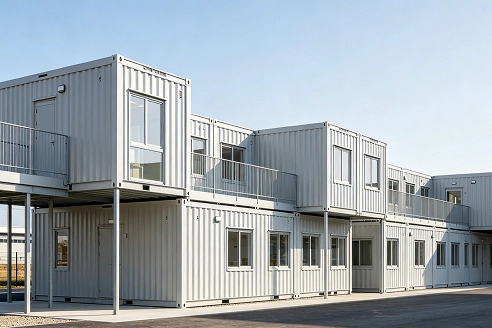
In different markets, school buyers may also use terms such as portable classrooms, demountable classrooms, or prefabricated classrooms as if they all mean exactly the same thing. They do overlap, but they do not always describe the same delivery method.
Some school projects use more integrated classroom units. Some use panelized systems assembled on site. Some are delivered as coordinated components and built into the larger modular building for schools.
Some clients may ask whether modular classrooms are just school trailer classrooms with a nicer name. That is exactly the kind of misunderstanding we see in the market. In practice, a school project might need temporary overflow space, a long-term classroom addition, or a more permanent campus expansion. The right answer depends on the site, the schedule, local code, and how the building will actually be used.
We do not force every project into one strict format. Lyngou helps define the right prefab approach for your school project.
Schools usually start here with a real problem: too many students, not enough space, and not enough time.
Prefab classrooms reduce the amount of work that has to happen on an active school site. That can help schools add capacity faster than a fully traditional build.
Portable classrooms for schools and other prefab systems can reduce noise, congestion, and disruption during the school term.
A more structured prefab process helps coordinate structure, layout, openings, utilities, and installation earlier in the project.
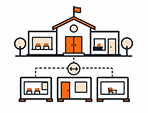
Solutions can support temporary classrooms, permanent additions, admin space, and other education buildings, depending on the project scope.
For many schools, the goal is not to buy a “box.” It is to add teaching space faster without interrupting normal campus operations.
Not every school project needs the same kind of building. Some schools need short-term relief. Others need long-term capacity.
Temporary classrooms and temporary classroom buildings are often used for renovation swing space, emergency replacement, or short-term enrollment pressure.
Portable classroom buildings, portable school buildings, and other flexible school units are suitable for projects that may need future relocation or phased expansion. EPA guidance notes that portable classrooms are often treated as long-term school space rather than something that is truly moved often.
Permanent modular classrooms and permanent modular school buildings are better suited to long-term campus growth, larger additions, and repeatable teaching blocks.
Schools rarely need just one generic building type. They need the right space for the right use.
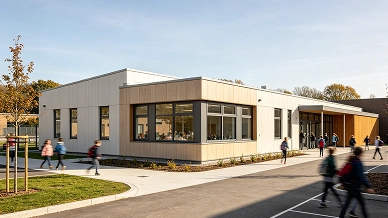
Permanent Modular Classrooms
Permanent modular classroom buildings for long-term campus development and school expansion.
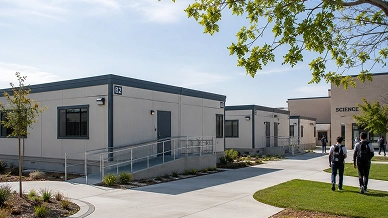
Temporary Classroom Units
For short-term capacity, campus renovation phases, and emergency teaching space.
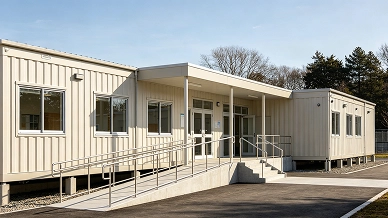
Portable Classroom Buildings
For schools that need flexible classroom capacity and site adaptability.
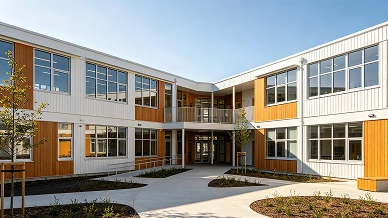
Two-Story School Buildings
For tighter sites or larger expansion projects, including selected two-story modular classroom building concepts.
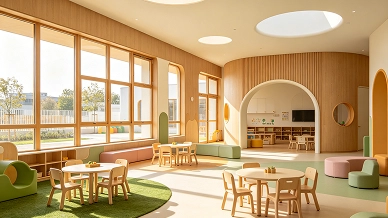
Specialty Learning Spaces
For science rooms, computer spaces, music rooms, and other specialist environments.
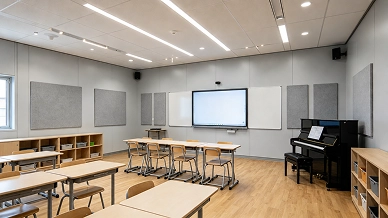
Preschool and Early Learning Buildings
For daycare, preschool, and other early education environments.
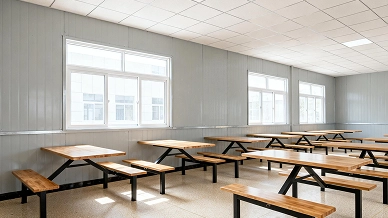
Other Modular Units for Schools
Broader modular units for schools that support mixed-use education layouts beyond standard teaching rooms. They may include school admin and support buildings for offices, staff rooms, school cafeterias, student housing and dormitories, resource areas, and campus support functions.
Not finding the right fit?
We can adjust existing layouts or develop a custom solution based on your needs.
This is where the real project conversation begins. Different projects use different levels of prefabrication.
A practical option for customized school projects that need local assembly, more site-specific adaptation, and flexible coordination.
Best for:
A strong fit for repeatable modular classrooms and larger modular school classrooms where faster installation and layout consistency both matter.
Best for:
Suitable for selected projects that need faster setup and reduced on-site work.
Best for:
Useful when some spaces repeat, but others need more local adaptation.
Best for:
ICC’s off-site construction guidance also distinguishes between componentized, panelized, and modularized approaches, which is exactly why schools should choose the method before they choose the buzzword. The better question is not what label people use. The better question is what kind of prefab system best fits the school, the site, the schedule, and the long-term use of the space. We help define the right delivery method based on your project, not just the label.
Have any questions? View more prefab house FAQs.
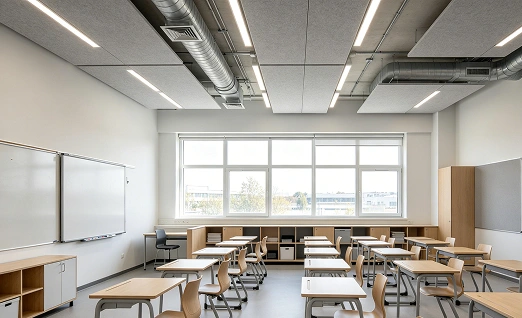
• HVAC and ventilation routes
• Lighting and power planning
• Technology and utility pathways
• Restroom module or restroom-ready layouts
• Façade options to fit the campus environment
• Selected skirting, trims, and finish-related items
• Classroom storage solutions
• Selected furniture and interior-related packages
A classroom building should support daily school operations, not just provide extra floor area. That is why custom modular classrooms matter.
Our classroom systems can be coordinated with key building services and interior needs during the planning stage.
Final installation, service connections, code compliance, inspections, and approvals are usually handled by licensed local contractors and project teams.
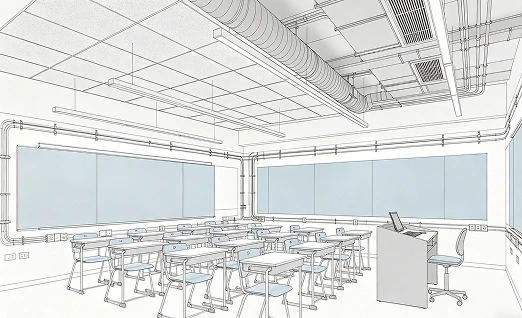
Good school planning is about creating usable learning space, safe circulation, practical storage, and classroom organization that works for both teachers and students.
Whether the project is a simple teaching unit or part of a larger campus expansion, layout decisions affect circulation, supervision, flexibility, and future growth planning. A well-planned prefab classroom system should make it easier to add capacity without creating awkward transitions, crowded access points, or disconnected learning spaces.
Our modular classroom buildings and prefab school buildings are often a strong fit for projects such as:
The cost of a modular classroom project is usually shaped by classroom size, room quantity, temporary or permanent use, delivery method, level of factory completion, MEP scope, finishes, furniture, shipping, site work, and installation conditions.
The better question is not simply “What does a modular classroom cost?”
It is “What level of prefabrication makes the most sense for this school project?”
School classroom projects are rarely defined by building size alone. Before a prefab classroom or portable classroom building moves into production, the school and project team usually need to confirm a few practical issues first.
The most important question is not just how fast the building can be delivered. It is whether the classroom solution fits the site, the school’s operating needs, and the local approval path. Key planning points include:
Building rules, approval processes, and installation expectations can vary by market.
Classroom access, entrances, walkways, and usable circulation need to be considered early.
Egress, fire separation, and related safety considerations should be reviewed as part of the planning process.
Ground conditions, utility access, and site readiness can affect both layout and delivery strategy.
A classroom building has to work within the school site, not just on paper.
Temporary overflow space, long-term expansion, and repeatable classroom blocks may each require a different approach.
A clearer planning process usually leads to a smoother installation process and fewer surprises later in the project.
School projects need clear planning, especially when they involve active campuses, tight schedules, local approvals, and multiple teams.
As a factory-based prefab manufacturer, Lyngou helps turn classroom needs into a more organized production and delivery process.
Our Advantage:
In real projects, the terms often overlap. Some portable buildings for schools are more integrated units, while some modular classrooms use panelized or component-based systems assembled on site.
They can be either. Some are planned as temporary classroom buildings, while others are used as permanent modular classrooms or larger campus additions.
Yes. Local permits, accessibility review, utilities, foundation work, and final installation requirements still apply.
Yes. Custom modular classrooms can be planned around layout, services, finish scope, and school-specific needs.
Yes. Depending on the project, prefab systems may help reduce certain types of site waste, improve material coordination, and support more efficient building strategies. In some cases, this may align with projects exploring green modular school buildings.
Yes. For selected projects, finish-related items, trims, baseboards, and furniture coordination can be included.
Tell us about your school type, classroom count, site conditions, timeline, and preferred delivery scope. We will help you define the most suitable prefab solution for the project.
Tell Us About Your Project