
Modular retail buildings designed around real project needs, real site conditions, and real opening deadlines.
Custom prefab retail building solutions for storefronts, pop-up shops, convenience stores, and commercial retail projects.
From building kits and panelized systems to more integrated prefab units, we enable faster, more flexible retail delivery worldwide.
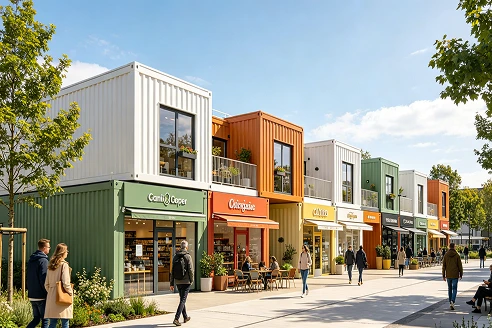
In real projects, the word “modular” can mean different things. Sometimes it refers to fully volumetric modular units. Or it is used more broadly for prefab retail spaces that are manufactured in parts and assembled on site.
The focus is not the label, but whether the building method helps the retail project open faster, stay consistent, and reduce unnecessary site work.
We support prefab retail building solutions for storefronts, pop-up shops, convenience stores, showroom buildings, and small commercial retail spaces. Depending on the project, the final solution may be panelized, kit-based, or more integrated.
Retail projects are different from many other commercial buildings.
A delayed opening is not just a construction problem. It becomes a business problem. Rent starts. Staffing starts. Marketing starts. Inventory arrives. Every lost week can affect revenue.
That is why retail space construction benefits from prefab thinking.
Factory-based production can reduce the amount of work happening at the site at the same time. That creates a cleaner path toward installation and fit-out. It also helps teams plan around storefront deadlines, seasonal launches, and multi-location brand rollouts.
A traditional site build can be messy. More labor. More weather exposure. More coordination issues. Prefab systems shift part of that work into a controlled production environment, which reduces on-site congestion and makes sequencing easier.
Retail brands care about repeatability.
They want the same visual language across locations. The same façade rhythm, counter position, customer flow, and feel when someone walks in.
That is one reason many clients look for a reliable retail space builder with prefab capability. Off-site and factory-coordinated systems improve repeatability across multiple stores when the brand wants to scale.
The International Code Council has developed standards and guidance for off-site construction that cover planning, design, fabrication, transport, assembly, and regulatory compliance. That matters because prefab is not just about speed. It is also about process discipline.
If a client is opening five convenience stores, a chain of portable storefronts, or a repeatable showroom concept, prefab can support a more consistent system from location to location.
Think about a coffee chain. If the first store looks polished but the third one feels improvised, customers notice. The brand notices too. In retail, construction quality is part of the brand experience.
That is why retail modular buildings are not only about structure. They are also about execution.
We support a wide range of prefab commercial retail buildings and related retail formats.
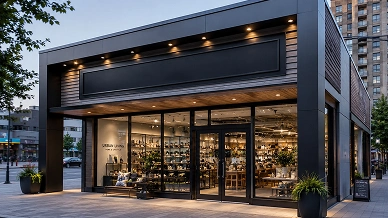
Storefront Buildings
For street-facing retail, we help clients create storefront-ready building systems with coordinated façade design, entrance placement, glazing strategy, and signage zones. This can work for both prefab storefront and modular storefront concepts.
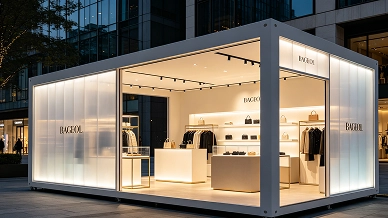
Pop-Up Retail Units
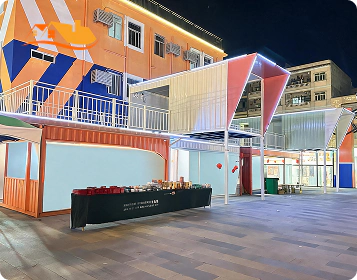
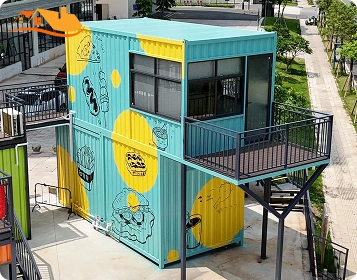
For short-term launches, seasonal campaigns, and brand activations, pop-up formats need speed and flexibility. These projects benefit from more integrated prefab delivery and simplified site work.
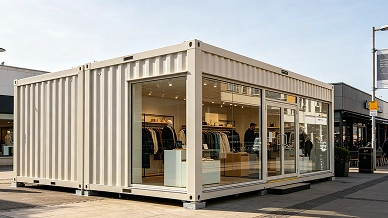
Portable and Temporary Retail Buildings
Not every retail project needs a permanent building from the start. A portable retail store or temporary retail building can support seasonal sales, pilot locations, event retail, roadside businesses, and market testing.
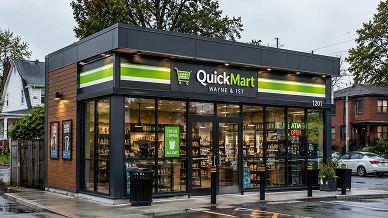
Convenience Stores
We can support convenience-focused retail formats where speed, repeatability, and efficient plan layout matter. For modular convenience store construction, the key is to find the right prefab system for the site, operating model, and rollout schedule.
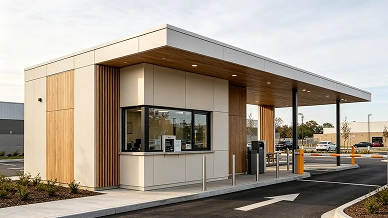
Drive-Thru Buildings
We also have prefabricated drive-thru buildings or modular drive-thru buildings for sale. Drive-thru projects require careful planning around queueing, service windows, circulation, and building envelope details.
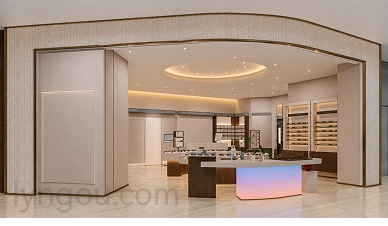
Showroom Buildings
A showroom building needs more than an enclosure. It requires presentation value. Good daylight, clean lines, display planning, and a brand-appropriate interior all matter.
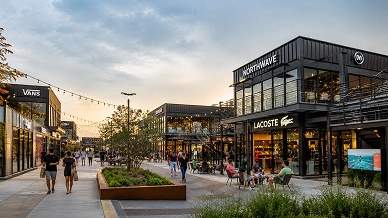
Marketplace / Retail Complex
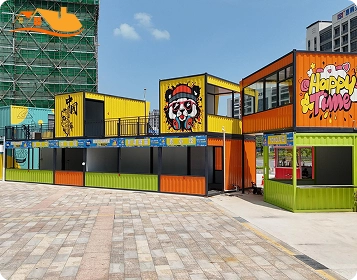
Some retail projects are not single stores. They are grouped commercial environments with multiple tenants, shared circulation, and phased development needs. Compared with fully conventional construction, prefab commercial systems can help simplify coordination across repeated units while improving rollout speed and consistency.
For larger retail projects, planning usually involves circulation, façade rhythm, signage strategy, service access, utility coordination, and phased installation sequencing.
Looking for a custom retail plan? We can adapt the design, layout, and delivery approach around your project.
We do not force every retail project into one construction method. Some projects need more flexibility for local assembly. Others need a more integrated prefab solution to reduce site work and support faster deployment.
For many custom retail projects, building kit or panelized delivery is the more practical approach. Prefabricated structural and enclosure elements are produced in the factory, then assembled and completed on site with local teams.
A panelized or kit-based prefab retail building is often a good fit for:
Custom storefront buildings
Small commercial retail buildings
Showroom buildings
Branded retail spaces with unique façade needs
Projects that need local MEP and fit-out coordination
Some retail projects benefit from a more integrated approach. This can reduce on-site work and support a faster setup, especially for smaller-format or repeatable units.
This approach may be suitable for:
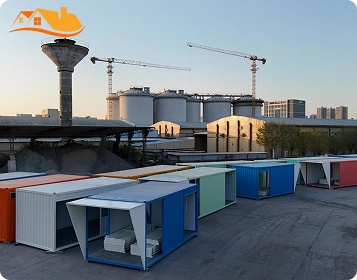
Portable retail store concepts
Temporary retail buildings
Compact convenience retail units
Repeatable kiosks or brand activations
Selected modular retail stores with a simpler layout
For clients exploring portable storefront, temporary shop, mobile retail store, or movable shop concepts, a more integrated prefab unit can make the project easier to deploy and relocate or reconfigure, depending on local rules and project intent.
For permanent and relocatable off-site projects, code classification and permitting can vary, so we always recommend confirming local requirements early in the project. ICC guidance also distinguishes between permanent and relocatable off-site construction.
A client may start by asking for a modular retail building, but after reviewing the site, opening schedule, and local installation conditions, a panelized or kit-based prefab approach may actually be the better fit.
A prefab retail building should support both brand presentation and daily operations.
Lyngou’s prefab retail store solution adapts the layout around customer circulation, sales areas, checkout points, storage and back-of-house requirements while aligning the factory package with the planned local fit-out.
We supply the building shell, storefront elements and selected interior scope.
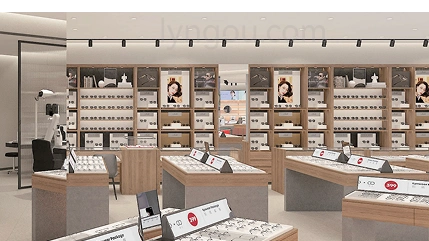
For complete display systems, counters and store fit-out packages, explore our Retail Display Fixtures service. See our glass display case buying guide for case types, sizes, lighting and layout.
Structure
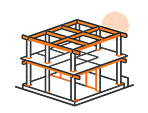
Panelized systems, building kits, and selected integrated prefab units.
Envelope
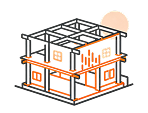
Storefront fronts, entrance zones, glazing, signage, and enclosure support.
Interior
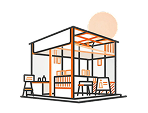
Display fixtures, counters, shelving, baseboards, accessories, and selected furniture-related items.
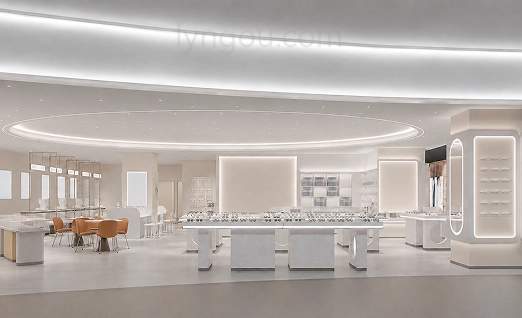
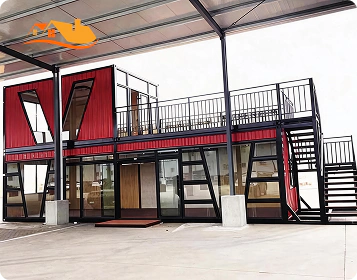
In commercial retail work, steel frames and prefabricated enclosure systems are often useful because they support durability, flexible openings, and coordinated storefront design.
Public-facing retail buildings also need early planning around accessibility and code compliance. For example, ADA standards set accessibility requirements for many public accommodations and commercial facilities, which is why layout, entrance, circulation, and service areas should be considered early.
Not every retail project should use the same building system.
Some projects are better suited to steel frame retail units. Others may work better with panelized wall systems, hybrid prefab structures, or more integrated prefab units.
The right approach depends on practical project conditions, such as:
Repeatable plans, façade standards and labeled packages help keep locations consistent.
Off-site production can reduce overlapping site work and protect the opening programme.
A controlled prefab package can reduce local coordination pressure where access or labor is limited.
Portable or more integrated units support testing, seasonal trading and shorter-term activation. For compact retail formats, portable storefront solutions can support speed without making the building feel temporary in a negative way.
For any brick-and-mortar retail project, early review of zoning, permits, and local site restrictions is also important. For instance, SBA guidance is a useful reminder that business location affects permits, taxes, and regulations.
Lyngou keeps this simple.
Our design network supports layout development, storefront concepts, customer flow, service areas and coordination between the structure and selected interior elements.
Tell us about your retail project, and we will help you define the most suitable prefab delivery approach for your timeline, layout, and site conditions.
To estimate your project and offer a more precise quote, we usually review:
These terms are often used interchangeably. In practice, prefab is broader. A modular retail building may refer to volumetric modular construction, while a prefab retail building can also include panelized systems, building kits, or hybrid off-site solutions.
Yes. For many projects, a building kit or panelized delivery is a practical solution. It supports local assembly, customization, and site-specific adaptation.
Yes. Beyond the structural and enclosure scope, we can also provide related finishing elements such as accessories, baseboards, and some furniture-related items.
Yes. The intended use, relocation strategy, code path, and foundation approach may be different. Local regulations should always be confirmed early.
Yes. We support convenience-store and drive-thru style projects with a prefab-led approach, depending on layout, service flow, and local project requirements.
It usually goes like:
Trusted by global clients.
Contact us to discuss your prefab retail buildings or portable retail stores.
Tell Us About Your Project