
Need office space fast, without the delays of conventional construction?
Lyngou develops modular and portable office buildings for construction sites, factories, warehouses, sales centers, and long-term commercial projects. We coordinate the prefab office system, layout, completion level, and delivery format around the site, intended use, and local installation conditions.
Custom Layouts · Flexible Delivery Formats · Export Project Supply
Not every modular prefab office should be planned or delivered in the same way.
Start with where the office will be used, how long it will remain there, and whether it may need to move again.
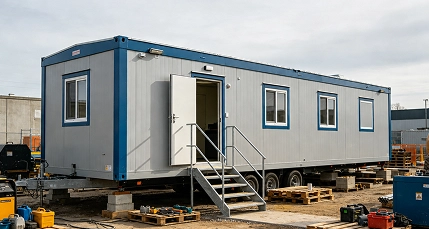
Portable offices provide practical workspace close to active operations. They can support project administration, shift coordination, plan review, secure document storage and site management.
The layout may include workstations, a meeting area, storage, communications equipment and an optional restroom. For work camps and remote projects, daily occupancy, climate conditions, security and access to utilities should be confirmed early.
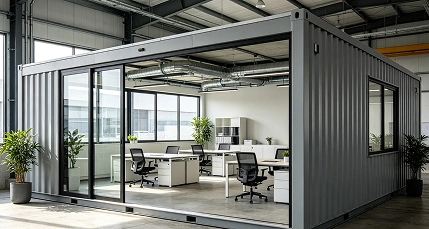
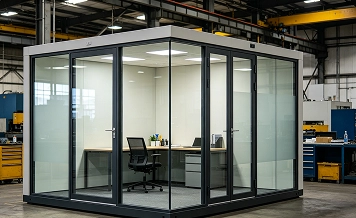
A modular warehouse office creates an enclosed workspace close to daily operations without requiring extensive conventional construction inside the facility.
The in-plant office may be used by supervisors, engineers, quality-control teams, or warehouse staff.
Planning should consider visibility toward the operational floor, acoustic separation, dust control, safe circulation, and access to existing utilities. These offices are often supplied as panelized or component-based systems for assembly inside the existing building.
The permanent prefabricated office building can support multiple offices, meeting rooms, reception areas, restrooms, staff facilities, and two-story configurations.
Compared with a temporary portable office, permanent prefab office buildings usually require more coordination around structural loads, foundations, energy performance, acoustics, exterior appearance, permanent utilities, and local approval.
Not sure how trailers, relocatable units and container-style offices differ? Read our guide to choosing a portable office.
Factory-prepared components allow businesses to add prefabricated office space with less on-site construction and disruption to active operations.
Factory preparation can proceed while local site work is being organized, reducing the amount of sequential construction.
More work is moved away from the site, helping reduce dust, noise, material storage and interference with ongoing operations.
Selected systems can be expanded, reconfigured or relocated when the facility or project changes.
Components, openings, service points and finishes can be prepared before packing and delivery. Factory preparation can improve material control, support reuse of suitable offcuts and reduce unnecessary site waste.
Modular Building Institute indicates that modular construction can shorten overall project schedules by 30%–50% in suitable projects.
A well-planned modular office space should reflect what people do inside—not simply how many desks fit within the external dimensions.
Best for:
Small project teams and short-term site management.
Planning focus:
Open workstations with space for drawings, equipment and records.
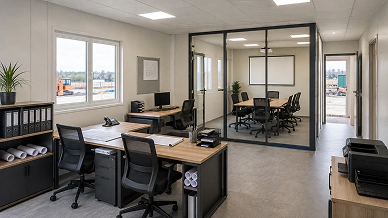
Best for:
Managers, contractors and visiting consultants.
Planning focus:
Separate work and support areas with a modular conference room for project reviews, team meetings and client discussions.
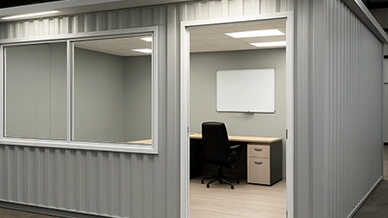
Best for:
Production, logistics and dispatch operations.
Planning focus:
Visibility toward the working floor while controlling noise, dust and traffic.
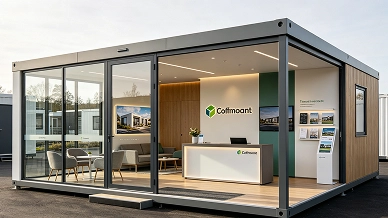
Best for:
Property sales, visitor reception and customer-facing projects.
Planning focus:
A clear arrival point with private consultation or meeting space.
Best for:
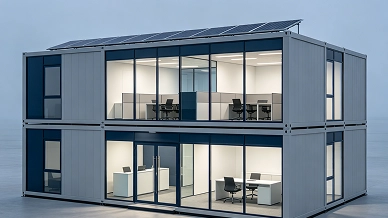
Projects that need more floor area but have limited ground space.
Planning focus:
A two-story or mezzanine office requires coordinated structural support, stair and guardrail design, fire-safe access and efficient utility distribution.
A prefab office package should be defined by a written scope, not by words such as “complete” or “turnkey.”
Final materials and performance requirements are confirmed during specification development. Tested acoustic, thermal or fire-performance values apply only to the selected and documented assembly.
| Lyngou Factory Package | Local Scope |
|---|---|
| Factory-prepared structure, wall, floor and roof systems | Site survey, local engineering, permits and approvals |
| Doors, windows, partitions and selected service preparation | Foundation, drainage, access and utility preparation |
| Agreed finishes, fixtures and equipment packages | Unloading, lifting, placement or assembly |
| Drawings, component labels and export packing | Final connections, testing and inspections |
Scope Note
“Factory finished” does not automatically include freight, foundations, unloading, local utility connections, permits or final inspection. Confirm every inclusion, exclusion and responsible party before comparing quotations.
The most suitable delivery format depends on shipping efficiency, road access, available local labor and the amount of on-site work.
Wall, floor, roof, and structural components are factory-prepared, labeled, and packed for assembly by the destination team.
This approach can improve shipping efficiency and reach sites that are difficult for large completed units. It requires more local labor and stronger installation coordination.
A prefab mobile office may be mounted on a trailer chassis or transported as a substantially factory-finished relocatable unit.
This format reduces local assembly and suits compact offices that may need faster placement or future relocation. Overall dimensions, transport weight, road restrictions, lifting conditions and final utility connections must be confirmed for the destination.
The main structure, enclosure and selected internal work are prepared in the factory, while destination-sensitive items are completed locally.
Hybrid delivery can balance factory quality control with shipping limitations, local code requirements and the availability of licensed local contractors.
Compare quotations on the same project scope—not the factory price alone.
Factory production and site preparation may proceed at the same time once the main dimensions, service points and responsibilities are confirmed.
Lyngou prepares each quotation around the agreed layout, specification, delivery scope and destination.
01
02
03
04
05
Modular office systems are selected around the layout, destination, transport route and local installation plan.
Our design network supports layout development and coordination between the structure, envelope, interiors and service points.
Quotations clearly define the agreed factory package, optional items and local responsibilities.
Experience exporting to more than 50 countries. Components are checked, labeled and packed around the assembly sequence.
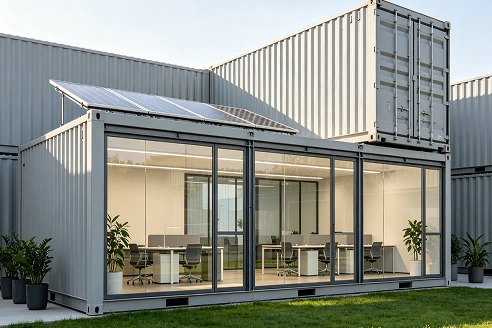
A freestanding prefabricated office with full-height glazing for natural light and a more commercial appearance.
An open office combining reception, workstations and an informal visitor seating area.
A prefab modular office layout with a large work surface, visitor seating and clear external visibility.
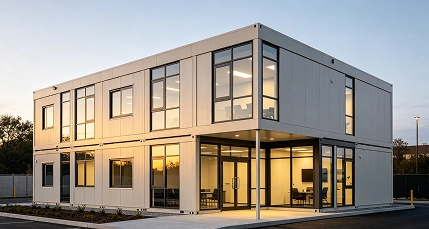
A two-story modern modular office building combining ground-floor retail space with an upper-level manager office and terrace access.
Yes. Temporary offices prioritize transport, faster setup and easier relocation. Long-term offices place more emphasis on the building envelope, permanent utilities, interior quality and integration with the site.
The intended service period should be confirmed before the structure and finishes are specified.
Yes. Lyngou can develop trailer-mounted office units based on the required layout, transport limits and destination regulations. Overall dimensions, weight and towing requirements must be confirmed before design approval.
Yes. Depending on the project, the package may include the structure, insulated building envelope, doors, windows, partitions, selected finishes and factory-prepared electrical, plumbing and climate-control points.
Every quotation contains a project-specific inclusion and exclusion schedule.
Lead time depends on the layout, building system, customization, engineering requirements and delivery destination.
A small single-unit modular office may be installed in one to three days once the site and foundations are ready. Larger multi-module or more customized offices may require several days to one or two weeks for placement, connection, utility work, and final checks.
Factory production, international shipping, site work and approval should be scheduled separately. Lyngou confirms a project-specific program after the drawings and delivery scope are agreed.
These items are normally managed by the client and qualified professionals in the destination market. Lyngou provides the agreed drawings and technical information needed for local coordination.
Yes. In-plant or warehouse office solutions are used inside industrial facilities, especially when buyers need enclosed office space without major disruption to operations.
Tell us where the office will be used, who will work inside and how you want it delivered.
Lyngou will help define a suitable layout, building system, factory package and delivery approach before preparing the quotation.
Tell Us About Your Project