Key Takeaways:
- Workforce housing in Atlanta usually serves moderate-income households, often around the 60%–80% AMI range.
- Many workforce housing units are income-restricted, so renters usually need to verify income, household size, and eligibility before applying.
- Availability is often the real challenge. A program may exist, but qualifying units can be limited, waitlisted, or released in phases.
- Location matters as much as rent. Workforce housing helps keep working households closer to jobs, transit, schools, and daily services.
- Prefab and off-site construction can support workforce housing delivery, but it does not replace Atlanta’s affordability rules or AMI requirements. It mainly helps improve speed, cost control, and project consistency.
Atlanta’s housing challenge is no longer just about growth. It is about access.
The city keeps adding jobs, investment, and new residents. But for many working households, the hardest part is not finding a job. It is finding a home within a reasonable commute that does not push rent to the edge of what their income can carry.
That is where workforce housing comes in. In Atlanta, the term usually points to housing for moderate-income households who earn too much for deep housing subsidies, but still struggle with rising rents in places close to work, transit, and daily services. The City of Atlanta describes the group in similar terms through its Inclusionary Zoning program, naming police, firefighters, teachers, government employees, and young professionals among the residents it is designed to serve.
A unit that looks affordable on paper stops feeling affordable when it adds a long commute, higher transportation costs, and less access to jobs, schools, and services. In that sense, workforce housing is really about keeping moderate-income households connected to the parts of the city they help sustain.
What Is Workforce Housing in Atlanta?
Workforce housing is often described as housing for middle-income or moderate-income households. That’s true in general. But in Atlanta, the definition is more specific.
Most workforce housing here is tied to Area Median Income (AMI). It is common to see units based on 60% or 80% of AMI, especially in rental projects influenced by local policies or public funding.
According to the U.S. Department of Housing and Urban Development, AMI is the standard used to set income limits across housing programs. It determines who can qualify for different types of housing.
This is also where some confusion comes in. You might think workforce and affordable are two separate buckets. But some workforce-labeled buildings are income-restricted and subsidy-backed, so they are technically part of the affordable-housing system.
For example, Georgia’s Housing Tax Credit Program defines affordable housing as rental units whose income limits run from 20% to 80% of AMI.
In Atlanta, workforce housing is often a market label for middle-income units. But in reality, many of these units are still part of AMI-based affordable housing programs.
Atlanta Workforce Housing Income Limits (2026)
Atlanta AMI income limits are based on data from the U.S. Department of Housing and Urban Development (HUD). For the Atlanta area, the key thresholds are:
- 60% AMI (lower income band)
- 80% AMI (most common workforce housing level)
Income Limits by Household Size
| Household Size | 60% AMI | 80% AMI | Typical Use |
| 1 Person | $48,000 | $63,950 | Entry-level workforce |
| 2 People | $54,840 | $73,100 | Couples or shared housing |
| 4 People | $68,520 | $91,350 | Families |
These limits became effective in June 2025 and are still commonly used in 2026.
Why Do These Numbers Matter?
These numbers are more than just guidelines.
They determine who can apply, what rent levels are allowed, and which households a project is designed for.
If you want to check the latest updates, you can visit the official HUD income limits page.
Most Atlanta working housing apartments use the 80% AMI level. If your income is above that, you may not qualify. If it’s below, you may be eligible depending on the property.
Who Qualifies for Workforce Housing in Atlanta?
Most properties follow the same general logic. Applicants need to fall below the income ceiling for the relevant unit type, provide documentation that verifies household income, and pass the property’s standard leasing review.
That usually means photo ID, recent pay stubs, bank statements, tax documents or W-2s, and completed applications for all adult household members.
Some buildings also require applicants to show that their rent will stay within a certain share of their income. This is usually set at 30% of household income.
Because housing programs are designed to keep rent affordable in a real, practical way. If rent takes up too much of your income, it becomes harder to cover other basic expenses like food, transportation, and healthcare.
The 30% rule is a widely used standard in housing policy. It helps make sure that residents are not “cost-burdened,” meaning they are not spending an unhealthy portion of their income on rent.
For example, if a property like Maverick sets this rule, it means your income must be high enough to support the rent, but still within the maximum AMI limit.
So this is not free housing, and it is not open-ended public assistance. It is income-restricted housing tied to specific thresholds, with normal leasing standards still in place:
- Full-time job
- Income below 80% AMI
- Stable income records
- Rent ≤ 30% of income
How to Apply for Workforce Housing in Atlanta?
Step 1: Check your AMI level
Most units are based on 60% or 80% AMI.
Step 2: Find Eligible Properties
Go to the property’s own workforce or affordable housing page.
Step 3: Prepare Documents
Gather documents before you start the workforce housing application in Atlanta. Important documents include pay stubs (last 2 to 3 months), W-2 / tax return, employment verification, and bank statements.
Step 4: Apply and Confirm Availability
Ask whether the building has immediate availability, a waitlist, or phased releases.
That last step matters more than many people realize. In Atlanta, the issue is often not whether a program exists. It is whether a qualifying unit is actually available when you apply.
Broadstone Pullman’s workforce page lists a detailed application package, including six months of checking and savings statements and recent consecutive pay statements for adult household members. Other properties use similar documentation standards.
A practical tip: start with the City of Atlanta Affordable Housing Tracker, then move to individual property pages. The tracker maps projects that achieved affordability through public subsidy or local ordinances such as Inclusionary Zoning, and it includes developments that are delivered, under construction, or financially closed.
Workforce Housing Apartments in Atlanta (Examples)
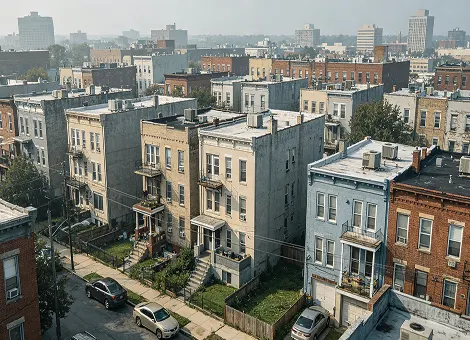
Workforce housing in Atlanta is not limited to one specific area. Instead, it tends to appear in locations where jobs, redevelopment, and housing policies overlap.
You will often find these units near major job centers, in growing redevelopment districts, or in areas influenced by local housing programs.
For example, Ascent Peachtree says it provides 70 workforce apartments and ties eligibility to 80% AMI. The Vivian markets newly constructed apartment homes as workforce housing in Atlanta and the Westside community. Maverick offers designated income-restricted units under the Atlanta workforce housing program.
| Area | Example Property | What to Know |
| Downtown | Ascent Peachtree | Offers workforce units based on 80% AMI eligibility |
| Westside | The Vivian | Part of a mixed-income development with workforce housing |
| BeltLine Areas | Maverick | Includes designated income-restricted units |
This reveals an important point about Atlanta’s market. Workforce housing is not only about paying less. It is also about location. The goal is to keep moderate-income households living closer to where they work, rather than being pushed to the outer edges of the city.
Key Workforce Housing Programs in Atlanta
Workforce housing in Atlanta is mainly supported by a few key programs.
Inclusionary Zoning (IZ)
The most important local policy is Inclusionary Zoning in Atlanta.
This program applies to certain new apartment developments with 10 or more units, in areas like the BeltLine Overlay District, the Westside Overlay District, and the Westside Park Affordable Workforce Housing District.
Developers must choose one of the following:
- Set aside 10% of units at 60% AMI, or
- Set aside 15% of units at 80% AMI, or
- Pay a fee instead of including these units
This is one of the main ways workforce housing units are created in Atlanta.
Public Subsidies Ordinance (PSO)
The second key policy is Atlanta’s Public Subsidies Ordinance.
If a project receives public funding, it must follow similar rules: 10% of units at 60% AMI, or 15% of units at 80% AMI.
Georgia DCA Housing Tax Credit Program
At the state level, the Georgia Department of Community Affairs (DCA) supports housing through tax credits. This program serves households earning 20% to 80% AMI and helps fund many income-restricted rental projects.
Because of this, many developments in Atlanta combine affordable housing units (lower AMI) and workforce housing units (higher AMI, often around 80%). This means one building can include different types of units for different income levels.
While these projects provide options, availability is often limited depending on location and timing.
Why Workforce Housing Is in Short Supply in Atlanta
The short answer is that policy can require units, but it cannot by itself guarantee fast delivery.
Atlanta has active housing tools. The city has a live tracker. The BeltLine and Westside continue to produce new units. Yet supply remains tight in the neighborhoods where moderate-income renters want to live most.
Several pressures stack together. Land is expensive in well-located areas. Financing is layered. Construction costs are difficult to control. Skilled labor is limited. Permitting and delivery cycles take time.
- High land costs in job-rich areas
- Long construction timelines
- Limited unit allocation per project
- Strong demand from moderate-income renters
So even when projects are approved, the path from policy intent to actual occupancy can still move slowly.
Some developers are exploring prefabricated systems to improve delivery speed and cost stability.
How Prefabricated Housing Can Support Workforce Housing Projects
This is not a universal fix. It is a delivery strategy. When people discuss prefabrication or modular workforce housing, the useful part is not the sales language. It is the measurable improvements in speed, cost control, and construction efficiency.
What Does the Data Show?
McKinsey’s modular construction research and the National Institute of Building Sciences give a useful benchmark:
- Faster delivery — Modular construction can reduce project timelines by 20% to 50%
- Cost potential — Under the right conditions, costs can be reduced by around 20%
- Less construction waste — Offsite construction can cut waste by 20% to 40%, especially at higher levels of prefabrication
These gains depend on design discipline, logistics, and organizational readiness.
Environmental Impact
Prefabricated systems often use mass timber or engineered wood, which can reduce carbon impact compared to traditional materials.
Studies show around 18% lower carbon impact in some building stages, and up to 39%–51% lower emissions in full life-cycle comparisons in certain cases, according to the U.S. Forest Service. Those higher figures are useful as scenario evidence, not as blanket promises.
What Does This Mean for Atlanta Projects?
For workforce housing in Atlanta, prefabrication does not replace existing programs. Inclusionary Zoning (IZ) projects still need to deliver required units at 60% or 80% AMI. DCA tax credit projects still need to meet 20%–80% AMI compliance requirements.
The city’s affordability rules still govern. Prefab workforce housing only changes one part of the equation: the likelihood of delivering on time, on budget, and with fewer downstream adjustments.
In short, it helps developers deliver required workforce housing units more reliably.
For larger multi-unit workforce housing projects, prefab apartment building systems can simplify planning, production, and delivery.
When evaluating prefabricated or off-site construction systems, project teams often look for:
- FSC-certified or traceable wood sourcing
- Standardized, repeatable building components
- Engineered wood systems such as CLT (cross-laminated timber) or glulam
These factors help improve consistency, sustainability, and scalability across projects.
Lyngou is one of the qualified prefab home manufacturers. We focus on delivering building systems that support workforce housing at scale. Our approach combines standardized components, engineered timber structures, and an integrated supply chain designed for predictable production and faster on-site installation. Learn about Lyngou.
Have a workforce housing project in planning or the early design stage? Share your requirements with Lyngou and get a preliminary solution and timeline estimate.
Workforce Housing vs Affordable Housing
In Atlanta, it is better to treat the AMI band as the conclusion, not the label.
| Type | Common AMI Range | Common Mechanism |
| Affordable housing | About 20%–80% AMI | DCA Housing Tax Credit and other subsidy programs |
| Workforce housing in Atlanta practice | Often 60% or 80% AMI, though the term is also used more broadly for moderate-income housing | Inclusionary Zoning, Public Subsidies Ordinance, mixed-income developments |
| Market-rate housing | No income restriction | Market pricing |
In Atlanta, the same project can sit inside an affordable housing framework and still be discussed publicly as workforce housing, especially when it serves working households near the upper end of the regulated income spectrum.
FAQs
What is workforce housing in Atlanta?
Housing for moderate-income households, usually tied to 60%–80% AMI.
What income standard appears most often in Atlanta workforce housing listings?
The most common public-facing threshold is 80% AMI, though city policy also relies heavily on a 60% AMI option.
What income qualifies?
Often around $40,000–$90,000 annually, depending on household size and the program’s AMI limit.
Do I need more than proof of income?
Yes. Most properties also require ID, tax or wage documents, bank statements, and full applications for adult household members.
What is the fastest way to search?
Use the City of Atlanta Affordable Housing Tracker to narrow the geography, then go straight to the property’s own workforce or affordable housing page for the current criteria and document list.
Are these units always immediately available?
No. Some projects have waitlists or release qualifying units in stages. The City’s tracker is useful for locating projects, but each property controls its own application and leasing timeline.
Final Thoughts
Workforce housing in Atlanta matters because it sits at the pressure point of the city’s growth. It is where public policy, commuting patterns, household budgets, and delivery capacity all meet.
For renters, the most important move is to focus on AMI bands, not just marketing terms.
For developers, the harder question is not whether demand exists. It clearly does. The harder question is how to deliver compliant, well-located units with enough speed and consistency to keep moderate-income households in the neighborhoods where the city needs them most.
That is the real issue Atlanta is working through now. Not whether workforce housing matters, but whether it can be delivered at the scale and pace the market is asking for.